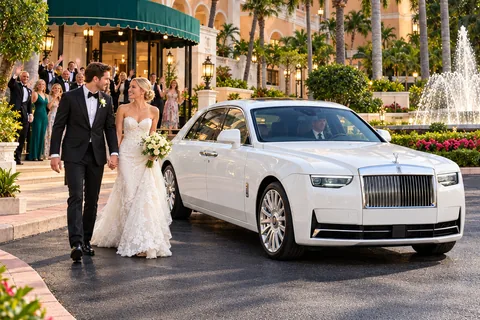
A wedding car service timeline should map every movement before choosing vehicles: getting-ready hotel, first look, ceremony, photos, reception, family transfers, wedding-party movement, guest shuttles, late-night returns, and getaway car. Each movement needs ready time, hard arrival time, vehicle class, passenger group, venue entrance, wait/release rule, and day-of contact. The timeline works best when VIP vehicles and guest loops are separated.
Published by Artisan editorial & operations · Reviewed
Artisan Chauffeur arranges wedding car service timelines through vetted licensed local operators with passenger groups, vehicle roles, venue entrances, wait rules, release rules, luggage or garment needs, and day-of planner contact confirmed before the event.
— Good fit
·The wedding includes separate couple, parent, wedding-party, guest, and late-night movements.
·The venue, hotel, park, or photo location has staging rules.
·The planner wants vehicle roles and timing clear before wedding day.
— Usually not a fit
·The event has one short transfer and no timing sensitivity.
— Vehicle fit
Sedan: simple couple exit or parent transfer
SUV: couple with dress space, family, luggage, and planner movement
Sprinter: wedding party, guest loop, rehearsal dinner, and late-night returns
Mixed plan: VIP SUV plus Sprinter loop
§ 02— SHORT ANSWER
The decision layer
This guide should help a traveler choose the right option quickly, then move into a quote when the itinerary needs control over pickup, vehicle class, and handoff.
Best overall
Build separate timelines for couple, parents, wedding party, hotel guests, airport arrivals, and late-night returns.
Cheapest
Use direct transfers for simple couple/family movements and hourly or loop service only where timing requires it.
Fastest
Name venue entrances and ready times before event day so vehicles do not block the wrong curb.
Best for luggage
SUV or Sprinter when dresses, garment bags, welcome boxes, overnight bags, or gifts need space.
Business travel
Not the core use case, but VIP SUV discipline applies to parents, planner movement, and family-office guests.
§ 03— OPTIONS COMPARED
Every realistic option compared
The important comparison is not just price. It is the tradeoff between cost, luggage friction, pickup control, and how much of the final handoff can be planned before confirmation.
Costs and timing reflect public source data and operator-network planning ranges; the quote states inclusions and pass-through variables before confirmation.
01
Getting-ready and first look
SUV is often safer than sedan when dress or bag space matters.
Time
Morning through early afternoon depending on venue and photo schedule
Cost
Sedan or SUV transfer, or hourly support when timing is uncertain
Best for
Couple, parents, immediate family, photographer movement, and dress space
Weakness
Sedans can be tight for dresses, garment bags, flowers, and overnight bags
02
Ceremony to reception
Set wait and release rules before ceremony starts.
Time
Timed around ceremony end, photos, cocktail hour, and reception call
Cost
Hourly or staged vehicle quote depending on hold and release
Best for
Couple, parents, wedding party, and VIP family movement
Weakness
Photos and ceremony delays can break a point-to-point-only plan
03
Guest shuttle or Sprinter loop
State whether the vehicle waits, cycles, or releases after the final wave.
Time
Pre-ceremony waves, reception close, after-party, and hotel returns
Cost
Hourly Sprinter or shuttle loop quote with minimum and overtime terms
Best for
Hotel blocks, wedding party, rehearsal dinner, welcome party, and late-night returns
Weakness
Loop timing fails when headcount, entrance, and final-call instructions are unclear
04
Getaway and late-night return
Give the planner authority to hold or release each vehicle.
Time
Reception end, after-party transfer, or last-call hotel return
Cost
Sedan/SUV getaway or hourly late-night hold
Best for
Couple exit, VIP family, older guests, and late-night hotel returns
Weakness
Vehicles released too early leave guests waiting during the hardest pickup moment
§ 04— OPTION-BY-OPTION
When each option wins
Start from the run of show
Use the planner's run of show to identify ready time, hard arrival time, passenger group, vehicle class, pickup entrance, drop entrance, wait rule, and release rule for each movement. Do not choose vehicles before the movements are known.
Separate VIPs from guest loops
The couple, parents, and VIP family should not depend on a guest shuttle loop unless the timeline has enough margin. Dedicated vehicles protect key moments while Sprinters or shuttles handle group movement.
Confirm venue access
Wedding venues, gardens, parks, hotels, and private clubs may have specific driveway, loading, permit, or valet rules. The timeline should name entrances and backups before the wedding day.
§ 05— ROUTE NOTES
What we check on this route
Guest shuttle timing should follow final headcount, hotel-block geography, and venue loading rules.
Large vehicles should have a named entrance and backup staging point.
The couple getaway vehicle should not be tied to the same release rule as the final guest loop.
§ 06— WHAT TO SEND
What to send to book
·Wedding date
·Planner or day-of contact
·Getting-ready, photo, ceremony, reception, hotel, and after-party addresses
·Ready times and hard arrival times
·Passenger groups by movement
·Vehicle class by movement
·Dress, garment, luggage, decor, gifts, or floral needs
·Venue entrances and loading rules
·Wait, release, overtime, booking terms, and gratuity treatment
Start the timeline from the planner's run of show. The first movement may be getting-ready hotel, first look, family pickup, airport arrival, or ceremony transfer depending on the day.
Should the couple use a sedan or SUV?
A sedan works for a simple exit with minimal bags and dress space. An SUV is safer when dress, bouquet, gifts, family, or overnight bags need more room.
How should guest shuttle timing work?
Guest shuttles should run by waves with clear pickup points, hotel blocks, venue entrances, and final-call instructions. State whether the vehicle waits, cycles, or releases.
What should the wedding transportation timeline include?
Include passenger groups, pickup and drop addresses, entrances, ready times, hard arrivals, vehicle class, wait policy, release rules, overtime, and day-of planner contact.
— Book now
Book your chauffeur
Route and pickup time first — eligible trips show vehicle classes priced side by side, with the trip total before checkout. Itineraries that need planning are prepared personally by the concierge desk.
Published by Artisan Chauffeur and reviewed by its editorial and operations team. Operational claims are tied to the sources listed for this guide; commercial details remain subject to the written booking confirmation.
Supports: Temporary events should provide accessible passenger loading zones for shuttles and private vehicles outside traffic flow Accessible loading zones need adequate clearance, pull-up space, access aisles, curb-ramp planning, signage, and accessible routes
Supports: 2026 Chevrolet Suburban seats up to 9 depending on configuration 2026 Chevrolet Suburban cargo volume behind third row listed at 41.5 cu ft (+2 additional cited claims)
Supports: Sprinter Passenger Van configurations list seating capacity of 12 or 15 depending on wheelbase and roof Sprinter Passenger Van cargo volume is listed at 70, 82, or 117 cu ft depending on configuration (+1 additional cited claims)
New York City Department of Transportation · Accessed April 25, 2026
Supports: NYC DOT operates dedicated hotel and neighborhood loading zones for short-term passenger pickup and drop-off No Parking pickup/drop-off rules govern curb access at hotel canopies and residential addresses (+1 additional cited claims)
Supports: Wedding guest transportation planning should follow finalized guest headcount, ceremony site, reception site, and seasonal demand Hotel shuttle availability and guest movement should be checked before final wedding transportation planning